
Rebuilds
Testing a Bachmann Spectrum 44-Tonner Before the Rebuild Begins
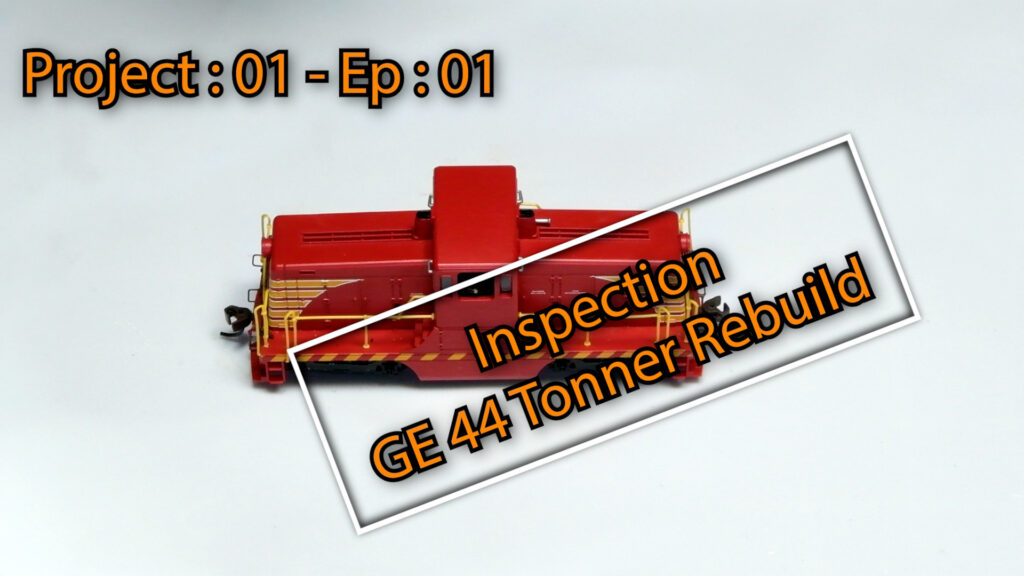
Table of Contents
Watch Along: Bachmann 44-Tonner Inspection
GE 44-Tonner Inspection — Finding Out What We’re Working With
When I picked up this Bachmann Spectrum GE 44-Tonner for twenty dollars, I knew it had potential. The question, though, was simple: does it actually run? Before taking anything apart or diving into upgrades, I like to give each used locomotive a fair test. It helps set expectations and gives me a sense of what kind of care the model will need as it moves into the rebuild process.
Putting It on the Test Track
The first step was straightforward: set the unit on the test track, give it 12 volts, and see what it does. Right away, there was a good sign—the engine moved under its own power.
The headlights lit up, although only faintly, which is normal for older incandescent bulbs. They’ll be replaced with LEDs later anyway, so I’m not concerned about that. What mattered most was the current draw. This one sat around 210–230mA, which is right in the acceptable range for a locomotive of this age.
That tells me the motor is healthy enough to keep going. With cleaning, lubrication, and a little attention, it should settle closer to the 150mA range—perfect for a future DCC decoder. A high current draw can cause decoders to overheat, so it’s always one of the first things I check when buying used.
What to Look For in a Used Locomotive
Buying second-hand can be a great way to grow your roster without spending $200–$300 on every engine. But it does come with risks. Over time, I’ve learned a few signs that help me quickly judge whether a model is a good candidate for restoration.
Here’s what I checked on this 44-Tonner:
Shell Condition
The shell was clean, with no cracks or signs of being dropped. No warping, no stress marks—just normal surface wear that weathering will easily blend into the final finish.
Grab Irons and Details
All the grab irons were intact. That’s a rare bonus on a used unit. Even if they weren’t, I can 3D print replacements, but having them in place saves time. The only concern is whether the previous owner glued them in with CA, which may make removal harder when it’s time to add a dull coat.
Couplers
Both couplers moved freely. They’ll be swapped for Kadees later, but smooth movement means no hidden structural issues.
Wheelsets and Trucks
This part matters more than most people realize. Corroded or rusty wheels often mean the locomotive lived in damp conditions—and that usually comes with deeper problems.
This unit showed only normal wear: light surface scratches, some marks from running on a ballasted layout, and nothing that raised red flags.
Screw Heads and Past Work
The screw heads showed signs of being removed before, which tells me someone was inside it at some point. Not a problem, especially since most of the internals will be replaced during the rebuild.
Overall, everything looked serviceable. No hidden nightmares. No deal-breakers.
Why This One Feels Like a Good Find
Used locomotives like this typically sell for $45–$80 depending on age and condition. Finding one for $20 without a box is already a win. Finding one that actually runs smoothly? Even better.
This little switcher has the right mix of charm and potential. It already runs. It’s structurally sound. And it’s ready for the upgrades that will carry it into a modern-era layout—LED lighting, roller-bearing trucks, new decals, weathering, and a proper DCC install.
There’s something satisfying about taking a locomotive like this, giving it the attention it deserves, and knowing the final result came from your own hands.
Next Step: The Tear Down
In the next video, the teardown begins. That’s where the real work starts—opening the shell, evaluating the internal components, and preparing it for the upgrades ahead.
If you’re following this series, thanks for being here. It’s always more meaningful when the process is shared. More updates coming soon.