
Rebuilds
Bachmann 44-Tonner Restore & Upgrade Series: First Look + Plans
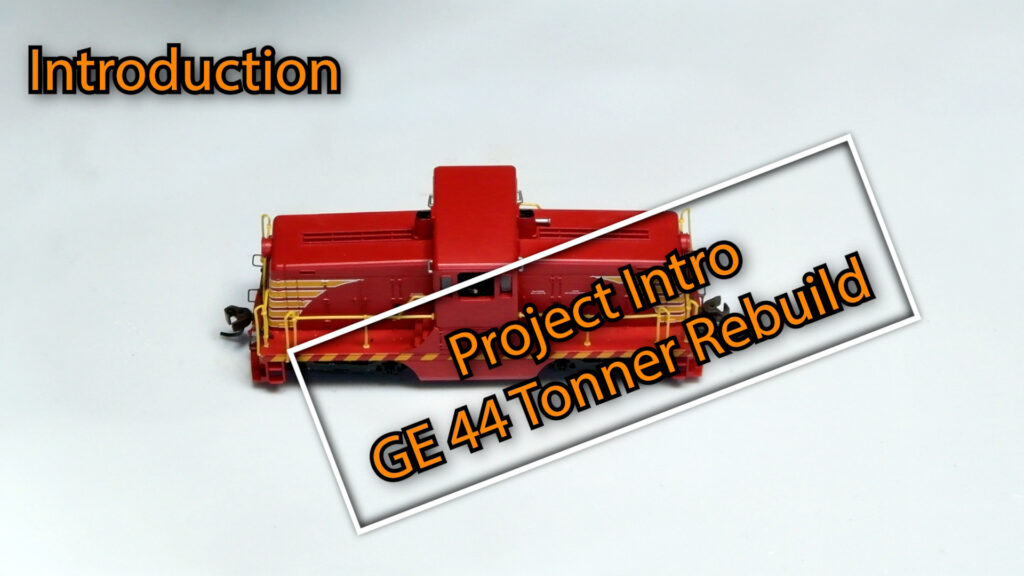
Table of Contents
Watch Along: Bachmann 44-Tonner Restore & Upgrade : First Look and Plans
Rebuilding a GE 44-Tonner — A New Project Begins
Some projects arrive the moment you need them, even when you don’t expect it. This GE 44-Tonner was one of those finds — sitting on a shelf, priced at twenty dollars, waiting for a second life. I wasn’t sure if it would run. I only knew it still had good bones and deserved another chance on the tracks.
This post kicks off the full rebuild series. The goal isn’t just to repair a locomotive, but to guide it into a version that fits the lifescape I’m creating: a modern layout where older equipment still works hard, rebuilt, upgraded, and carrying new purpose.
Starting Point: A Solid Little Switcher
The model itself — a Bachmann Spectrum 44-Tonner — looked surprisingly clean when I brought it home. No decals, classic friction-bearing trucks, and basic lighting. Nothing fancy. Nothing upgraded. But that’s what made it a perfect candidate for a full teardown and rebuild.
Here’s what’s planned for the journey ahead:
- Printing custom decals for my layout
- Swapping the friction trucks for my roller-bearing versions
- Replacing the stock plastic couplers with Kadees
- Adding LED lighting
- Making it DCC-ready
- Light weathering to bring it into the present era
It’s a complete transformation, not just a repair.
A Bit of Real-World History
The prototype GE 44-Tonner has always had a story worth telling. Built between 1940 and 1956, with just under 400 units produced, it served in countless industries as a dependable little workhorse.
People often ask why GE built it at 44 tons instead of something rounder like 45. The reason comes down to economics. A regulation at the time required locomotives 45 tons or heavier to have a two-person crew. So GE built theirs at 44. One ton lighter, and suddenly it only needed a single operator.
That decision kept the engine practical, affordable, and appealing to smaller industrial sites — which is why so many survived for decades and why a few are still moving today.
Why This Project Matters
Part of what I enjoy most in this hobby is taking something used, obscure, or overlooked and pulling forward what it could be. This 44-Tonner fits that perfectly. It’s a way to blend past and present, honoring what the locomotive once was while giving it a modern form that belongs in the layout I’m building.
In the next episode, I’ll walk through the first real inspection. Whenever you buy used equipment, it’s worth taking a methodical look — gears, wiring, wheels, lubrication, and any telltale signs of issues that could turn into bigger problems.
At the moment, I still don’t know if this locomotive even runs. That’s part of the excitement.
Coming Next
The teardown begins in the next video. We’ll go step-by-step and see exactly what shape this old switcher is in. Maybe it’s fine. Maybe it needs more work than expected. Either way, it’s going to find its place in the world I’m building.
If you want to follow along as the rebuild continues, you’re welcome to join me.
More updates coming soon.